10 Expert Garage Organization Tips to Maximize Your Space
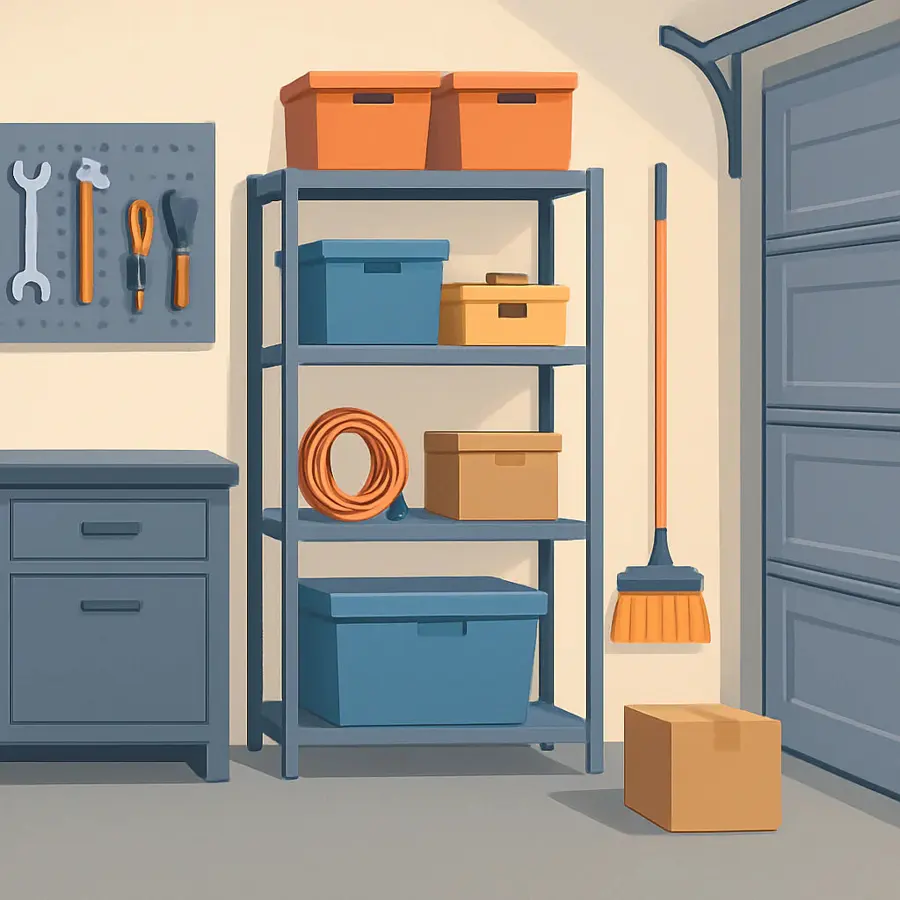
A garage becomes easier to maintain when every storage decision supports a real activity: parking, vehicle care, yard work, sports, household overflow or workshop tasks. The goal is not to fill every wall. It is to create clear zones, protect walkways and make frequently used items easy to return. These ten practical tips provide an editorial planning framework; they do not depend on a particular room size or a claim of professional installation.
Quick Answer
Empty and classify one zone at a time, keep the vehicle and walking paths fixed, place heavy items low, move active equipment to walls, and put seasonal belongings in labeled bins above or at the perimeter. Give every category a capacity limit. If a shelf, cabinet or bin is full, edit that category before adding another storage product.
The garage organization collection can supply hardware after the plan is clear. Buying organizers first often creates more objects to organize.
1. Draw the parking and movement envelope first
Park the largest vehicle normally kept in the garage. Open each vehicle door, the hatch and the garage door, then mark the space needed with painter’s tape. Add a continuous path from the home entrance to the exterior and keep access to electrical panels, utilities and emergency equipment clear. This envelope is the non-negotiable center of the layout. Storage must fit around it, not slowly consume it.
Measure projections as well as wall width. A bicycle, cabinet handle or coiled hose can extend far into the room even when its mounting hardware looks compact. Photograph the marked floor before reorganizing so the boundary is easy to restore if bins and furniture are temporarily moved.
2. Sort by activity, not by object shape
Create categories based on where and when items are used: vehicle care, hand tools, gardening, sports, cleaning, home repair, camping and seasonal décor. This makes retrieval more intuitive than placing every long object together or every plastic item together. Keep each category in a single primary zone whenever possible. Duplicates become visible, and the family knows where an item should return.
Use a temporary “decide later” box, but set a deadline and size limit. Without a boundary, uncertain items simply become a new permanent category. Broken products, dried materials and empty packaging should not earn valuable storage space.
3. Put the most-used objects in the easiest reach band
The area between roughly waist and shoulder height is premium territory. Reserve it for the tools, gloves, sports gear and supplies used every week. Place occasional lightweight items higher and dense items lower. This arrangement reduces bending, climbing and overhead handling while making the garage faster to reset after a project.
Children’s lightweight equipment can have a lower return zone, provided it is separated from sharp tools, chemicals and heavy hanging objects. Household organization succeeds when the person using an item can put it away without moving three other containers.
4. Use walls for awkward, active gear
Rakes, shovels, bicycles, hoses, cords and folding chairs consume floor area because they lean and spread. A correctly anchored rail, hook system or panel can give each one a stable position. Group objects by use and leave enough spacing to remove one without dislodging its neighbors. The garage wall storage collection offers several approaches.
Before mounting, verify the wall substrate, fastener requirements and the exact product capacity. Do not treat drywall alone as a structural anchor for heavy equipment. A hook is useful only if the object’s shape seats securely and does not project into a vehicle door path.
5. Match shelving depth to the containers
Shelves should support the full footprint of their bins without significant overhang. Very deep shelving may seem efficient, but it can hide supplies behind other supplies and narrow the aisle. Shallow shelves work well for fluids, paint accessories and small household stock; deeper shelves suit camping equipment and large seasonal containers. Keep the heaviest material near the floor.
Browse garage shelving only after measuring the largest planned container. If existing shelves are sound, standardizing bin footprints may be a more useful improvement than replacing the rack.
6. Label bins for retrieval, not decoration
A label should answer what is inside and when it is used. “Electrical—outlets, plates, wire nuts” is more useful than “Supplies.” Place the label on the side visible from the aisle and add a second label on the lid when containers may be rearranged. For seasonal bins, include the holiday or season and a short content list.
Clear containers reduce guessing, while opaque containers create a calmer appearance. Either can work. The essential features are a manageable filled weight, a lid appropriate to the environment and dimensions that fit the supporting shelf. Compare garage storage bins by actual outside measurements.
7. Separate tiny hardware before it spreads
Screws, anchors, washers, electrical connectors and picture hardware disappear when they share a large tote. A drawer cabinet or compartment case makes quantity and size visible. Use broad families first, then subdivide only where confusion remains. A label such as “wood screws” may be enough for a casual homeowner, while a regular builder may need separate gauge and length positions.
The small-parts organizers collection focuses on this problem. Place the organizer near the work surface, but do not mount it where open drawers interfere with the walkway or collect grinding and cutting debris.
8. Build one functional work zone
A useful work zone needs a stable surface, task lighting, nearby hand-tool storage and safe power access. It does not need to occupy the entire back wall. Define what happens there—repairing equipment, woodworking, charging batteries or household projects—and store only the relevant tools nearby. Unrelated household overflow belongs in another zone.
Workbenches, garage pegboard storage and tool storage can form a compact workstation. Keep charger ventilation paths clear, follow device manuals, and avoid turning temporary extension cords into permanent wiring.
9. Use overhead space selectively
Overhead storage should hold items that are lightweight, secure and used infrequently. Measure the open garage door, tracks, opener, lights and the tallest vehicle point before choosing a location. Plan the retrieval method at the same time as the rack. If a container cannot be raised and lowered under control, it should not be stored above.
The safest overhead plan may be a narrow shelf along a wall instead of a large rack over a vehicle. Visit overhead garage storage to compare formats, and follow the exact installation instructions for the selected product and ceiling structure.
10. Create a five-minute reset routine
Organization lasts when cleanup is shorter than avoidance. Put an open return basket near the door for items that belong elsewhere, keep a small trash and recycling point in the work zone, and schedule a five-minute reset after yard work or projects. Once a month, walk the vehicle envelope and return anything that has drifted into it.
Seasonal transitions are the best time for a larger edit. When winter or summer gear rotates, inspect containers, remove expired or damaged items, and update labels. A system should change with the household rather than preserve a layout that no longer matches its activities.
A simple weekend sequence
On the first pass, remove trash and obvious donations without buying anything. On the second, map zones and measure. On the third, reuse sound shelves, cabinets and hooks. Buy only the missing pieces that solve a defined problem. A current sports-equipment organizer listing on Amazon can be considered for an active family zone, while the rolling ball-storage listing illustrates a mobile option. Verify live dimensions, materials, seller and package details before purchase.
What should not share a zone
Avoid storing food or attractive animal feed beside chemicals. Keep ignition sources and heat-producing equipment away from materials that their labels identify as combustible. Separate clean sports gear from automotive fluids and dirty yard equipment. Do not place heavy or sharp objects above a child-accessible station. Product labels, appliance manuals and local requirements control where hazardous or temperature-sensitive items may be kept.
Frequently Asked Questions
How do I organize a garage without emptying everything at once?
Work in one bounded zone, such as a single shelving bay or six feet of wall. Maintain a clear sorting area and finish that zone before opening another. This prevents the project from disabling the entire garage.
What belongs in cabinets instead of open shelving?
Cabinets suit items that benefit from dust protection or visual containment. However, a cabinet is not automatically approved storage for fuel, chemicals or other hazardous products. Follow each product label and applicable requirements.
Is pegboard or slatwall better?
Pegboard is efficient for many small tools near a bench. Slatwall or track systems often suit bulkier baskets and hooks. The best choice depends on object weight, accessory compatibility, wall area and how often the layout will change.
How can I keep the garage organized with children?
Give frequently used lightweight gear a low, open return position. Use picture labels where helpful, keep the path clear and place sharp, heavy or hazardous items in controlled adult zones.
What if I have more belongings than storage?
Do not automatically add storage. Set a capacity for each category, keep the best or most useful items, and relocate belongings that do not logically need garage conditions. Storage capacity should follow priorities, not determine them.
Turn the Categories Into a Zone Map
After sorting, use the garage storage zone layout guide to place each category around parking clearance, fixed obstacles and real activity flow before buying additional organizers.
Final Verdict
The highest-impact garage organization step is to protect movement first and assign every remaining area a job. Use walls for awkward active gear, shelves and bins for contained supplies, small-parts organizers for hardware and overhead space only for safe seasonal storage. The hardware and small-parts organization hub and floor-protection hub can help connect the storage plan to the rest of the room.