Garage Floor Tile Selection Guide: Profiles, Loads, Moisture, and Fit
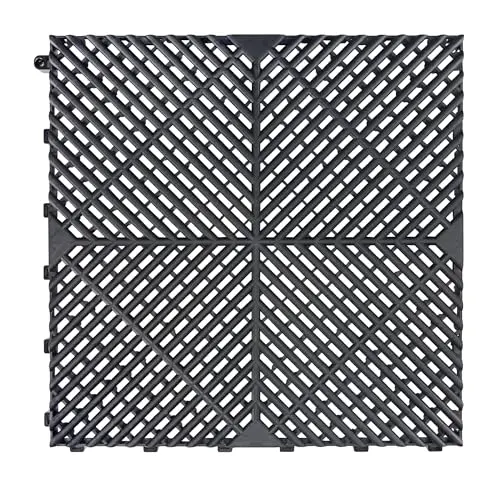
Quick Answer: Choose garage floor tiles as a complete system, not by color alone. Start with the slab and the work the floor must support. Rigid vented polypropylene usually suits wet parking bays that need airflow below the walking surface; rigid solid-top tiles keep small parts and debris on top; flexible PVC-style tiles can feel quieter and more forgiving underfoot; peel-and-stick tiles require a smooth, dry, compatible slab and behave more like a bonded finish. Before buying, verify the exact product’s vehicle-use approval, concentrated-load limits, temperature movement, chemical guidance, transition pieces, cleaning method, and installation instructions.
A garage floor has several jobs at once. It has to accept vehicle tires, rolling cabinets, foot traffic, tracked-in water, grit, seasonal temperature swings, and the occasional spill without making doors, drains, or walking routes harder to use. That is why a tile that looks convincing in a product photo can still be wrong for the room. This guide compares the major tile formats through a single selection process so you can identify the requirements that matter before choosing a pattern.
Use this as an editorial decision framework, then use the manufacturer’s current instructions for the exact tile. Product-level requirements control the final choice. My Garage Products is a discovery site; Amazon or the listed marketplace seller supplies current prices, availability, specifications, shipping, warranty, and return terms.
Disclosure:
Compare current garage floor tile options on Amazon
Start With the Floor System, Not the Finish Pattern
The useful first question is not “Which tile looks best?” It is “What must this floor do every week?” Write down the room’s parking, workshop, storage, cleaning, and access tasks. A two-car parking bay in a snowy climate has a different moisture problem from a climate-controlled hobby garage. A fixed workbench needs a different surface than a rolling tool chest. A motorcycle kickstand, vehicle jack, jack stand, or narrow metal caster creates a concentrated load that cannot be evaluated from a broad distributed-load claim.
Map the garage into zones. Mark where tires stop, where the steering wheel is turned, where doors drip, where snow melts, where cabinets roll, where people stand, and where the garage door receives direct sun. Then note drains, slab joints, posts, stairs, thresholds, floor-mounted equipment, and low door clearances. This zone plan determines whether one tile system can serve the whole room or whether tiles should be paired with a targeted garage floor mat.
| Tile format | Useful starting use | Main advantage | Important verification |
|---|---|---|---|
| Rigid vented interlocking | Wet parking bay or wash-prone zone | Water and grit can move below the walking surface | Drainage path, under-tile cleaning, opening size, rolling loads |
| Rigid solid-top interlocking | Parking and general workshop coverage | Small parts and most debris remain on top | Traction when wet, expansion gap, tire and chemical guidance |
| Flexible PVC-style interlocking | Workshop or mixed-use bay | Denser feel and potentially quieter footfall | Staining, thermal movement, caster behavior, vehicle approval |
| Peel-and-stick or bonded tile | Smooth, dry slab where a low profile matters | Minimal transition height and no floating-grid movement | Moisture, preparation, adhesive compatibility, hot-tire use |
| Soft foam or fitness tile | Defined exercise or light comfort zone | Cushioning for body-weight activity | Not assumed suitable for vehicles, jacks, stands, or sharp loads |
Compare Rigid Vented and Solid-Top Tiles
Vented tiles use openings or channels so tracked-in liquid and loose material can pass beneath the visible surface. This can keep shoes and tires above small amounts of water, but it does not remove the water from the garage. The slab still needs a viable drying or drainage path, and the tile system needs a practical way to be lifted or cleaned below. In a bay where salt and grit accumulate, access beneath the tile can matter as much as the top-surface pattern.
Check the opening geometry when the garage must support rolling stools, narrow casters, mobility devices, or frequent foot traffic. The U.S. Access Board’s accessibility standards use “stable, firm, and slip resistant” as the general test for covered floor surfaces and also address opening size and direction in accessible routes. Those provisions do not automatically govern every private residential garage, but they provide a useful design lens: a surface should not create avoidable rolling resistance, trapped wheels, or abrupt edges.
Solid-top interlocking tiles keep screws, washers, leaves, and most dirt where they can be swept or vacuumed. Their seams still admit some moisture, and their texture can affect both traction and cleaning. A deep diamond or coin pattern can disguise dust but may require a brush rather than a quick flat mop. A smoother top can be easier to clean but must still have the wet-traction characteristics the space requires.
If both profiles seem plausible, order samples and test them in the actual garage. Walk on them dry and damp. Roll the smallest caster used in the room across the joints. Place a sample at the threshold to check door clearance. Set it in direct sunlight near the open door and compare the manufacturer’s temperature guidance. A sample cannot prove long-term durability, but it can expose texture, sound, connection, and transition problems before a full order.
Compare vented and solid-top garage tile formats on Amazon
Rigid Polypropylene Versus Flexible PVC-Style Tiles
Rigid polypropylene systems commonly use a ribbed underside and snap-together connection. They can create a crisp modular surface, provide channels beneath the tile, and allow a damaged module to be replaced. Their rigidity makes slab support and perimeter expansion important. A high spot, depression, or unsupported edge can produce rocking, noise, or connection stress rather than disappearing beneath the floor.
Flexible PVC-style tiles are denser and may feel less sharp underfoot. They can follow minor texture differently from a rigid tile, but “flexible” does not mean they can safely bridge a moving crack, loose concrete, or pronounced depression. They can also have different reactions to tire compounds, oils, solvents, heat, and sunlight. Verify the exact product instead of treating all PVC tiles as chemically identical.
The dedicated PVC versus polypropylene garage tile comparison explores those material differences in depth. For this larger decision, focus on what the material changes: sound, support, stain response, dimensional movement, cleaning, connection behavior, and how easily a single tile can be removed later.
Peel-and-Stick Tiles Are a Different Installation Decision
Peel-and-stick and other bonded tiles are not simply thinner interlocking tiles. They depend directly on the slab and adhesive bond. Dust, old sealer, moisture, cracks, surface texture, incompatible coatings, or weak concrete can undermine adhesion. A bonded tile also cannot float around a moving joint in the same way as a modular system.
This format can make sense where door clearance is tight and the slab is smooth, sound, dry, and compatible with the adhesive. It becomes a poor shortcut when the goal is to hide water entry or avoid concrete preparation. Confirm vehicle-tire suitability, temperature limits, required moisture testing, primer needs, joint treatment, cure time, and removal expectations before buying. Do not assume a product labeled “vinyl tile” is approved for a garage.
Inspect the Concrete Before You Cover It
Sweep and vacuum the slab, then inspect it in strong light. Look for active cracks, vertical displacement, spalling, powdery surfaces, loose coatings, high spots, depressions, and evidence of water. Note whether moisture appears after rain, snowmelt, washing, or humid weather. A modular tile can hide discoloration, but it cannot repair a failing slab or stop water entry.
Stable hairline cracks and cosmetic marks are different from movement, heaving, or crumbling concrete. If the condition is uncertain, get the appropriate concrete or building professional involved before installing a floor. The focused guide to garage tiles over uneven or cracked concrete explains how to separate surface appearance from conditions that need repair.
Check existing coatings too. A floating interlocking tile may tolerate a sound old finish differently from a bonded tile, but loose paint or flaking material should not be ignored. The goal is a sound, clean support plane that matches the selected system’s instructions.
Plan Moisture as a Route, Not a Marketing Feature
Ask where water enters, where it moves, and how it leaves. Vented tiles can let water drop below the walking surface; channels beneath solid tiles may allow some air movement; mats can contain tracked-in liquid; coatings can keep water on top. None of those facts fixes a leak, reverses a poor slab slope, or guarantees a dry subfloor.
In wet climates, draw the likely path from tire drip lines to the drain or cleanup point. Confirm that the chosen tile does not block a drain, trap the garage-door seal, or send water toward stored items. Decide how you will vacuum, squeegee, pump, or lift sections for cleaning. If the problem is limited to one vehicle footprint, a containment mat may be simpler than an entire tile floor. The Garage Flooring & Floor Protection hub compares those approaches.
Read Load Claims in Context
A capacity number without a test method is not enough. A manufacturer may be describing compression, a distributed load, rolling load, or laboratory condition. That figure may not predict what happens under a small steel jack wheel, stand foot, motorcycle kickstand, loaded cabinet caster, or wheel turned while the vehicle is stationary.
For vehicle service, treat the tile as a finish rather than support equipment. Jacks, ramps, lifts, and stands must be used according to their own manufacturers and on a surface approved for the setup. Confirm the flooring maker’s written guidance for concentrated loads before placing lifting equipment on the tile. Do not improvise a load-spreading plate unless the relevant manufacturers permit and specify that arrangement.
The garage tile guide for cars, tools, and heavy equipment provides a deeper load-screening checklist. As a general safety benchmark, 29 CFR 1910.22 requires workplace walking-working surfaces to support their maximum intended load and to be kept free of hazards. That rule applies to workplaces, not every private garage, but the principles are sensible for any workshop.
Browse garage tiles after checking the intended load and manufacturer guidance
Allow for Temperature Movement and Direct Sun
Floating plastic tiles change dimension with temperature. The amount depends on the material, tile design, room size, color, exposure, and manufacturer. The front rows of a garage can receive intense sunlight while the rest of the floor remains cooler. Heavy cabinets or fixed equipment can also pin a floating floor and keep it from moving as designed.
Follow the exact expansion-gap, acclimation, and layout directions for the product. Do not copy a gap measurement from another brand. For example, current manufacturer instructions vary by tile style, while both Swisstrax and RaceDeck explicitly require space at walls and fixed objects. That is evidence that expansion planning is essential, not a universal dimension for every system.
Keep the floor inside the garage-door closure line and confirm that the door, weather seal, track hardware, side door, steps, cabinets, appliances, and lift posts have clearance. Use compatible edge ramps or transition pieces at exposed boundaries. An unsupported cut edge in the tire path can become the most vulnerable part of an otherwise strong layout.
Choose Texture and Transitions for the People Using the Garage
Traction is a system property, not a permanent promise. Water, oil, snow, grit, cleaner residue, wear, footwear, and surface pattern all affect slip risk. Look for product-specific test information and cleaning instructions, but also design for prompt spill removal and clear routes. A heavily textured tile can provide a different feel under shoes while becoming harder to mop; a smooth tile can be easier to wipe while showing dirt and fluid sooner.
Transitions deserve equal attention. Edge ramps should not intrude into a walking or rolling path without a plan. Threshold height affects carts, creepers, stools, lawn equipment, motorcycles, and mobility devices. The U.S. Access Board distinguishes small vertical changes from beveled transitions and ramps in accessible routes. Even where those dimensions are not legally required, the underlying idea is valuable: minimize abrupt level changes and keep routes stable and predictable.
Calculate Coverage From the Installed Layout
Measure the floor in rectangles and verify every dimension. Decide whether tile will run beneath cabinets and appliances or stop at their toe kicks. Mark posts, steps, drains, irregular corners, and the inside line of the garage door. Then use the product’s actual installed coverage per tile or pack, not a nominal description.
Layout changes the quantity. A checkerboard, border, or directional pattern can create color-specific pack needs. Perimeter cuts, mistakes, damaged pieces, and future repairs require a reasonable allowance. Keep matching spares because colors, molds, and connection profiles can change. The garage floor tile sizing guide walks through the calculation without pretending one waste percentage fits every room.
Compare tile sizes, pack coverage, and edge pieces on Amazon
Compare Tiles With Mats and Epoxy Before Committing
Tiles are strongest when you want broad modular coverage, replaceable sections, and a finish that can be installed without coating cure time. Mats are strongest when the problem is concentrated beneath a vehicle or at a workbench and the surface should remain movable. Epoxy and other coatings are strongest when a properly prepared slab and bonded seamless finish fit the project.
None is automatically cheaper over the whole project. Compare slab preparation, moisture evaluation, crack repair, trim, waste, tools, labor, downtime, cleaning, replacement, and the cost of correcting a poor installation. The Garage Floor Tiles vs Epoxy guide addresses the bonded-versus-modular decision. The Garage Floor Mats collection covers movable containment and targeted protection.
A Seven-Step Garage Floor Tile Selection Workflow
- Define the task: List parking, washing, repair, storage, fitness, and workshop activities by zone.
- Inspect the slab: Record cracks, height variation, moisture, coatings, drains, and door transitions before choosing a tile.
- Eliminate unsuitable formats: Reject any product without clear approval for the intended vehicle, load, temperature, and environment.
- Choose the surface profile: Decide whether water and debris should remain on top or pass through to a planned cleaning route.
- Test the interface: Sample the texture, sound, caster movement, connection, thickness, edge ramp, and door clearance in the real garage.
- Plan movement and maintenance: Follow the product’s expansion instructions and decide how the top and underside will be cleaned.
- Price the complete system: Include edge pieces, cuts, spare tiles, preparation, tools, freight, and any professional repair—not only square-foot material cost.
Reject a Tile System When Any of These Remain Unknown
- The manufacturer does not clearly approve the tile for the intended vehicle or workshop use.
- The slab has active moisture, movement, spalling, or height variation that has not been evaluated.
- The load claim cannot be connected to rolling, concentrated, or distributed conditions relevant to the garage.
- The floor would block a drain, interfere with a door, or create an exposed edge in the tire path.
- The expansion plan conflicts with fixed cabinets, lift posts, walls, or direct-sun exposure.
- The cleaning method cannot reach water, grit, or chemicals that will collect beneath the selected profile.
- Replacement tiles, compatible ramps, and trim cannot be identified before installation.
Review current garage floor tile systems and accessories on Amazon
Frequently Asked Questions
Are vented garage floor tiles better than solid tiles?
Vented tiles are better when the garage has a defined route for water and an under-tile cleaning plan. Solid tiles are better when small parts and surface debris should remain on top. Neither profile is universally better, and neither fixes the source of a moisture problem.
Can I install garage floor tiles over a drain?
Only if the tile manufacturer and drain layout allow it without obstructing flow or access. Water still needs a route to the drain, and the drain may require periodic cleaning. A removable access section can be useful when the system is designed for it.
Should heavy cabinets sit on top of floating tiles?
That depends on the tile maker’s instructions, cabinet weight, anchoring, and the expansion design. Heavy fixed equipment can pin a floating floor. Decide cabinet placement before laying tile and follow both manufacturers’ requirements.
Will garage tiles hide cracks and uneven concrete?
They may hide cosmetic discoloration and bridge minor stable texture, but they do not repair active cracks, vertical displacement, loose concrete, or major low spots. Rigid tiles require support; flexible tiles still need a sound compatible base.
Can I use a floor jack or jack stands on garage floor tiles?
Do so only when the flooring manufacturer permits the specific concentrated-load use and the lifting-equipment instructions are followed. Tile is not structural support equipment. If the documented requirements are unclear, use an approved stable surface rather than guessing.
How much extra tile should I order?
There is no universal allowance. Extra quantity depends on room shape, border pattern, product pack sizes, cut complexity, damaged pieces, and the number of matching spares you want for later repairs. Calculate from the actual installed layout.
Do interlocking tiles need adhesive?
Many floating interlocking systems do not, but that is product-specific. Bonded tiles, edge areas, commercial applications, or special transitions may have different requirements. Use the current installation instructions for the exact tile.
Final Verdict
The best garage floor tile is the system that fits the slab, water path, load type, temperature range, transitions, and cleaning routine with the fewest unresolved assumptions. Choose vented tiles when below-surface drainage and cleaning are planned; choose solid modular tiles when sweepable coverage and replaceable sections matter; consider flexible systems for their material-specific feel and behavior; use bonded tiles only when the slab and adhesive requirements are satisfied.
Color and pattern come last. First verify the manufacturer’s written vehicle-use, load, expansion, chemical, and installation guidance. Then test a sample at the garage door, measure the installed layout, and keep matching spares. Start with the Garage Floor Tiles collection, and use the broader floor-protection hub if a mat or coating approach may solve the problem more directly.
Compare garage floor tiles after completing the selection checklist