Garage Pulley Storage Systems vs Ceiling Lifts: Best Options Compared
Garage Pulley Storage Systems vs. Garage Ceiling Storage Lifts: An In-depth Comparison for Optimizing Your Space
Maximizing every square foot of your garage can transform it from a cluttered catchall into a streamlined, functional workspace or storage haven. For many homeowners, the garage is not just a place to park the car, but a workshop, gear locker, or hub for outdoor hobbies. Leveraging vertical space is one of the most effective ways to do this. That's where specialized solutions such as Garage Pulley Storage Systems and Garage Ceiling Storage Lifts come into the picture.
In this comprehensive comparison, we will explore each system's advantages, limitations, ideal applications, installation processes, safety considerations, and cost implications. By the end, you’ll clearly understand which solution best aligns with your needs, budget, and goals for a more organized and accessible garage.
Understanding Garage Ceiling Storage Solutions
Why Ceiling Storage Matters
The ceiling is among the least utilized aspects of garage real estate. While wall shelving and floor cabinets are common, overhead solutions harness unused space for items you don’t need every day but still want easy access to—think seasonal sports equipment, camping gear, or storage bins full of decorations. This approach can:
- Free up valuable floor space for vehicles, workbenches, or movement
- Reduce tripping hazards and clutter
- Protect stored items from moisture and pests
- Make cleaning and organizing easier
Garage Pulley Storage Systems: Overview, Pros, and Cons
What Are Garage Pulley Storage Systems?
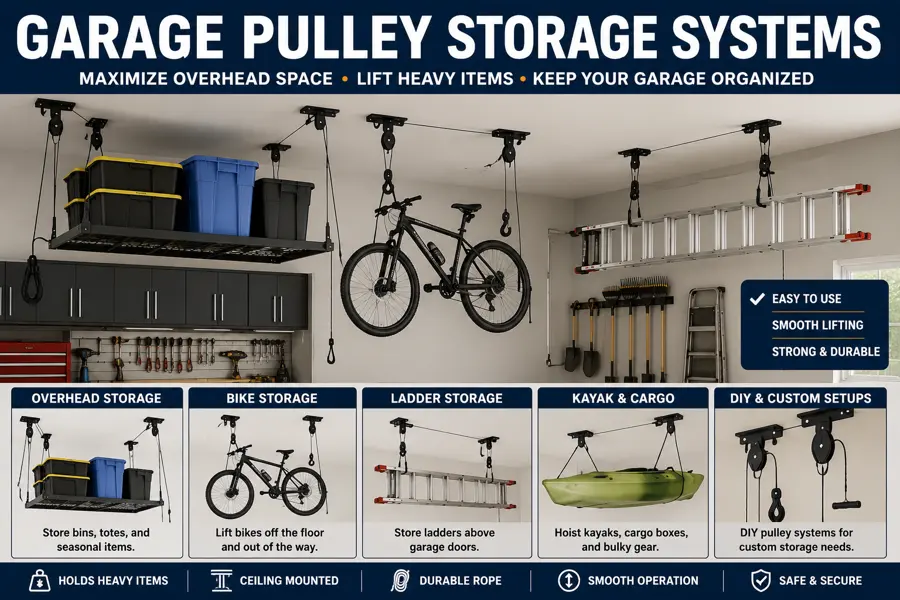
Garage Pulley Storage Systems use a combination of pulleys, ropes or cables, and sometimes mechanical winches, allowing you to raise and lower ceiling-mounted platforms, racks, or hooks. These systems are especially popular for hoisting bikes, kayaks, ladders, and other bulky but relatively lightweight items.
Key Features
- Rope-and-pulley or cable-driven mechanism
- Manual operation—raise and lower by pulling cords
- Customizable mounting options for specific items (e.g., kayaks, bikes, ladders)
- Safety latches or locking mechanisms to prevent accidental drop
- Typically designed for loads under 125 lbs per lift point
Advantages of Garage Pulley Storage Systems
- Accessibility: Easily lower items to ground level, reducing the need for ladders
- Targeted Use: Tailored for specific storage needs—such as kayak hoists or bicycle lifts
- Cost-Effective: Generally less expensive than powered ceiling lifts or larger racks
- DIY-Friendly: Many systems are designed for simple home installation
- Space-Saving: Minimal physical footprint on the ceiling
Limitations of Garage Pulley Storage Systems
- Weight Limitations: Not suitable for heavier storage bins or large items
- Manual Effort: Heavier loads can require significant physical effort to lift
- Item-Specific: Less flexibility for general-purpose storage—often item-specific
- Clutter Risk: Multiple pulley systems can make a garage look cluttered if overused
Common Applications
- Hanging bicycles horizontally or vertically
- Storing kayaks and canoes flat against the ceiling
- Lifting ladders out of the way
- Hoisting seasonal sports equipment (skis, snowboards)
Garage Ceiling Storage Lifts: Overview, Pros, and Cons
What Are Garage Ceiling Storage Lifts?
Garage Ceiling Storage Lifts are integrated platforms, shelves, or baskets suspended from heavy-duty cables and mounted onto overhead ceiling tracks or brackets. Operation may be manual (via a crank or pulley) or powered (motorized lift with a remote or wall switch). These systems are tailored for larger, heavier loads such as plastic storage bins, luggage, or even spare tires.
Key Features
- Large platforms or baskets for general storage
- Higher weight capacity—often 200-600 lbs, depending on the model
- Manual or motorized operation (some with remote controls)
- Adjustable height and locking safety mechanisms
- Expandable or modular construction for increased storage area
Advantages of Garage Ceiling Storage Lifts
- Heavy-Duty Storage: Designed for heavy or bulky items
- General-Purpose Use: Can store a wide variety of items in bins, boxes, or totes
- Powered Options: Reduce manual effort and make operation accessible for all
- Space Optimization: Maximize ceiling area with larger platforms
- Secure Storage: Robust design minimizes risk of accidental drop or failure
Limitations of Garage Ceiling Storage Lifts
- Higher Cost: Premium systems may have higher upfront investment
- Complex Installation: May require professional installation, particularly for motorized units
- Overhead Clearance: Need sufficient garage height for effective use
- Less Flexible: May be overkill for lightweight or small-item storage
Common Applications
- Storing multiple storage bins or totes
- Stashing seasonal gear (holiday decorations, camping equipment)
- Storing tires, luggage, or infrequently used tools
- Bulk storage for household or garden supplies
Feature-by-Feature Comparison: Garage Pulley Storage Systems vs. Garage Ceiling Storage Lifts
| Feature | Garage Pulley Storage Systems | Garage Ceiling Storage Lifts |
|---|---|---|
| Weight Capacity | Typically 30-125 lbs per lift point | 200-600 lbs (whole platform) |
| Intended Use | Item-specific (bikes, kayaks, ladders) | General storage (bins, totes, large gear) |
| Operation | Manual (rope-and-pulley) | Manual crank or motorized lift |
| Accessibility | Single item at a time | Multiple items at once |
| Installation | Easy, often DIY | Moderate to complex, sometimes requires a professional |
| Cost | $20–$200 per item | $160–$900+ per unit |
| Safety Features | Manual locks, release latches | Automatic locks, backup safety cables, etc. |
| Customization | Highly customizable for unique gear | Some modularity, often standard platforms |
Installation and Setup: What to Expect
Garage Pulley Storage Systems Installation
Most pulley storage kits are designed for DIY installation. You’ll use lag bolts or screws to secure the anchor brackets into ceiling joists or beams. Pulley mechanisms are threaded with rope or cable, and hooks/clamps hold your item. The process typically includes:
- Identifying joists and marking anchor points
- Drilling pilot holes and securing mounting hardware
- Assembling and mounting the pulley components
- Threading rope/cable and testing operation
Installation can take from 30 minutes to a couple of hours, depending on the item and system.
Garage Ceiling Storage Lifts Installation
A Garage Ceiling Storage Lift requires more thorough planning, as platforms or racks must align with the joist structure for safety, and powered units require electricity. The process may involve:
- Mapping ceiling joists for anchor points
- Marking and drilling for robust mounting brackets
- Assembling platform, cable, or lift system
- Setting up crank or wiring for motorized versions
- Testing with partial, then full load
Because of the heavy loads involved, manufacturer recommendations often suggest professional installation, especially if you lack experience in structural mounting or wiring.
Time and Tools Required
- Pulley systems: Standard tools (drill, screwdriver, stud finder), generally 1-2 hours
- Storage lifts: Power drill, level, stud finder, socket set, possibly electrical wiring skills; may take 2-4 hours or more
Safety and Maintenance: Long-Term Reliability
Safety Considerations
- Load Limits: Always follow weight recommendations—exceeding them risks serious injury or property damage.
- Secure Anchoring: Only anchor into solid joists or beams, never drywall alone.
- Operation: Keep hands, hair, and loose clothing away from moving cables and gears when operating lifts.
- Regular Inspection: Check for fraying cables, worn pulleys, or loose bolts periodically.
Maintenance Needs
- Lubricate pulleys and moving parts annually
- Check cables and ropes for wear or fraying each season
- Test safety locks/mechanisms monthly
- Tighten any loose hardware as needed
Both systems are relatively low-maintenance when installed and used properly. High-quality units can last for years with only periodic checks and basic care.
Best Use Cases: Which System Fits Your Needs?
Garage Pulley Storage Systems: Ideal For...
- Outdoor enthusiasts with kayaks, canoes, or bikes to store
- Households with ladders, sports gear, or single-item storage needs
- Budget-conscious DIYers looking for an efficient upgrade
- People who prefer item-specific solutions and have limited ceiling height
Garage Ceiling Storage Lifts: Ideal For...
- Homeowners needing bulk or bin storage off the floor
- Families wanting to "hide" seasonal or rarely accessed items
- People who prefer powered or less physically demanding solutions
- Garages with high ceilings and multiple storage needs
Cost Analysis: What to Expect
Pulley Systems
- Typical kit: $20 to $100
- Premium or specialized systems (e.g., for large kayaks): up to $200
- Tools, time, and possible handyman labor (optional): varies
Ceiling Storage Lifts
- Manual platform lift: $160 to $400
- Motorized/larger lift: $400 to $900+
- Professional installation (if needed): $100 to $400
In summary, pulley systems are generally the more affordable entry point, while ceiling storage lifts demand more upfront cost but deliver greater storage capacity and convenience.
Aesthetic & Organizational Impact
Both storage types elevate the organization and usability of your garage but do so in distinct ways:
- Pulley Systems: Neatly suspend individual items, making garage look methodical; risk of visual clutter if excessive pulleys are installed.
- Storage Lifts: Conceal storage in streamlined baskets or platforms, lending the garage a clean, open appearance.
If you’re aiming for a visually uncluttered ambiance, ceiling storage lifts often have the edge, especially for larger or multiple items.
Environmental Considerations
Reducing clutter and storing items properly supports a balanced, productive lifestyle. Using vertical space encourages healthy habits by keeping workspaces clear and making it easier to access outdoor recreation gear, tools, or cleaning supplies when you need them.
Additionally, careful organization can prolong the life of your gear and prevent waste, as items are less likely to get lost, damaged, or forgotten at the bottom of chaotic piles.
Frequently Asked Questions (FAQ)
Are these systems compatible with all garages?
Most modern garages with standard framing can accommodate some form of ceiling storage. However, it is crucial to check ceiling height, joist spacing, and maximum allowable load for your specific scenario before beginning installation.
Can I install these systems myself?
Many Garage Pulley Storage Systems are DIY-friendly if you have basic tools and experience with light home improvement projects. Garage Ceiling Storage Lifts, particularly motorized ones, may require electrical skills and careful alignment for safety, for which professional installation is recommended.
What if I need to access items frequently?
Pulley systems can make frequent access to specific, lightweight items simple. If you need access to an entire platform of stored goods, a ceiling storage lift (especially motorized) will provide more convenience and efficiency.
How do I maintain safety?
Always adhere to manufacturer guidelines, regularly inspect hardware and cables, and immediately address any signs of wear.
Will these solutions add value to my home?
While typically not a direct factor in home valuation, a clean, organized, and spacious garage can positively impact buyer perception and improve daily usability, contributing to overall property appeal.
Conclusion: Which Option Should You Choose?
Ultimately, the decision between Garage Pulley Storage Systems and Garage Ceiling Storage Lifts comes down to your specific storage needs, budget, and the type of items you need to organize.
- Choose Garage Pulley Storage Systems if you have specialized equipment (like bikes or kayaks), want a cost-effective upgrade, and enjoy simple, DIY-friendly solutions.
- Choose Garage Ceiling Storage Lifts if you require robust, general-purpose storage for heavier or bulkier items and value the convenience of raising/lowering entire platforms at once, particularly with powered options.
Either option supports a more organized home, helps maintain balance in your daily routines, and encourages healthy habits by making clutter-free, efficient spaces a reality. Investing in the right system will transform your garage into a streamlined, flexible, and accessible environment—ready for projects, hobbies, and storage needs for years to come.
Ready to reclaim your garage? Explore current listings of Garage Pulley Storage Systems and Garage Ceiling Storage Lifts today! For product documentation and installation requirements, visit our Contact page or check out our project gallery for inspiration.